Thursday, October 31, 2013

Intel debuts 4G LTE modem for tablets and ultrabooks

Intel has officially announced the commercial rollout of its latest multimode, multiband 4G LTE chipsets. Intel’s XMM 7160 is already getting a global rollout after debuting on Samsung’s Galaxy Tab 3 10.1.

The popular chip maker has also expanded its portfolio of 4G LTE chipsets with the introduction of PCIe M.2 modules. These new SoCs are designed exclusively for tablets, ultrabooks and come with an integrated radio frequency transceiver module, which enables the manufacturing of powerful and cost effective devices.
Intel XMM 7160 is one of the smallest, multiband LTE solutions for smartphones and tablets. The chip offers seamless connectivity across 2G, 3G and 4G LTE networks along with the support for 15 different LTE bands simultaneously.
The newly announced PCIe M.2 LTE chips are also cost-effective and come with embedded modules for different bands of data connectivity across various device types. The M.2 (XMM 7260) modules also support GPS.
Intel’s next-generation LTE chipset, the XMM 7260 will be available in 2014.

Alleged image of Motorola Moto G leaks out on Twitter

After appearing alongside the Moto X on Motorola’s website the other day, the yet to be announced Moto G showed up yet again. This time, an image of the smartphone, along with some alleged specs made the rounds on Twitter.

Alleged photo of the Moto G (click to enlarge)
Reportedly, the Moto G will feature a Qualcomm Snapdragon S4 Pro SoC with 1.5GHz quad-core CPU. The display is said to be a 4.7” 720p unit. An 8MP camera, 8 or 16GB of built-in memory, and an LG-made 1,950mAh battery complete the list of leaked specs.
The Moto G is said to start for free on contract when available.

Apple Invents Power Management System with Solar Panel Optio

1. Cover - Apple invents solar panel for power mgmt system
On October 31, 2013, the US Patent & Trademark Office published a patent application from Apple that reveals a new power management system that will work with both a power adapter and seamlessly with a portable solar panel accessory for busy people on the go. Apple's engineers are thinking big with their on-site solar power now creating the energy equivalent to powering 17,600 homes a year. The experience that Apple's engineers are gaining with working with solar panels is filtering through to creating a power management system for future Macs and iDevices. Apple has already been granted seven solar power patents thus far and you could review most of them in our Green Technology Archives. Today's patent goes one step further than most by introducing us to a solar power panel accessory for mobile devices like a MacBook or iPhone that won't require a power converter. Apple's system may be closer to reality than first thought considering that Apple's senior power design engineer noted as the inventor of this system has been snatched by Samsung within the last year.

Apple Invents Portable Solar Panel Accessory for Recharging Devices on the Go

Apple's patent filing states that in the absence of the power adapter and/or mains electricity, the portable electronic device may be powered by the battery until the battery is fully discharged. Because the battery has a limited runtime, operation of the portable electronic device may generally be dependent on the availability of mains electricity. Hence, use of portable electronic devices may be facilitated by improving access to power sources for the portable electronic devices.

Apple's invention relates to providing a power management system that supplies power to components in an electronic device. The power management system includes a system microcontroller (SMC) and a charger. The electronic devices that will be able to take advantage of Apple's new solar panel include a MacBook, iPad, iPod touch and iPhone.

During operation, the power management system accepts power from at least one of a power adapter and a solar panel. Next, the power management system supplies the power to components in the electronic device without using a converter circuit between the solar panel and the power management system.

In some embodiments, using the power management system to supply the power to the components involves tracking a maximum power point of the solar panel.

In some embodiments, tracking the maximum power point of the solar panel involves measuring one or more output powers associated with at least one of the solar panel and the power management system, and adjusting an input voltage of the power management system based on the one or more output powers. For example, the input voltage may be adjusted based on the output power(s) using a perturb-and-observe technique and/or an incremental conductance technique.

2. Apple patent figs 1 and 5 - Power Mgmt System using Solar Panel
As noted in Apple's patent FIG. 1, a MacBook Pro includes functionality to accept power from a solar panel 106 in lieu of and/or in addition to power from power adapter 104.

Like a power adapter, a solar panel may connect to the MacBook Pro via a USB connector, MagSafe connector, and/or other power connector. Electricity from the solar panel may then be used to charge the battery and/or power the components of the MacBook Pro or other electronic device.

In addition, a power management system in the electronic device may be configured to accept power from a solar panel without using a converter circuit between the solar panel and the power management system. In other words, the power management system may operate within the electronic device to convert power from the solar panel into a voltage, current, and/or form that are compatible with the battery and/or components of the electronic device.

According to Apple, the solar panel may operate as a power source to an electronic device without requiring an additional converter circuit between the solar panel and the power management system. Instead, existing parts of the power management system (e.g., charger or system microcontroller) may be modified to convert power from the solar panel and perform Maximum Point Power Tracking (MPPT) on the power. In turn, the power management system may represent a size and/or weight savings over conventional power management systems.

Apple's patent FIG. 5 noted above presents us with a flowchart illustrating the process of tracking a maximum power point of a solar panel in accordance to their invention.

Apple's patent FIG. 4 noted below shows us an overview of a power management system for supplying power to components in an electronic device.

3. Apple patent fig 4, Power mgmt system, solar panel

Patent Credits

Apple credits Kisun Lee, Manisha Pandya and Shimon Elkayam as the inventors of patent application 20130290743 which was originally filed in Q3 2012. For engineers and geeks who like to delve into this kind of technology could also view another kind of power management system patent that was published today. Apple's "Power Management for a system having non-volatile memory" patent could be found here.

As always, count on Samsung being in this new race related to solar power. And with Apple's engineer defecting to Samsung in the last year, the race could certainly be a heated one. Who will win this race to market? Only time will tell.

Galaxy Nexus to miss on Android 4.4 KitKat

Google officially announced its newest Android OS – the 4.4 KitKat. The latest version of the Android will debut on the Nexus 5 and as tradition dictates, the upgrades for the other Nexus devices will come shortly after that.

However, the Samsung Galaxy Nexus will be missing on the Android 4.4 KitKat fun. The Galaxy Nexus was first launched about two years ago and the devices falls outside of the 18-month update window that is followed by Google and other manufacturers to upgrade their smartphones.

Android 4.4 KitKat has been designed to run smoothly even on devices with 512 MB of RAM confirms so it’s obviously not about the hardware. The end of the update cycle for the Galaxy Nexus seems to be all about Google saving a few bucks on development costs.
With Android 4.4 aiming to reach a billion users, it’s quite disappointing to know that the Galaxy Nexus will not be able to taste the latest OS. This also brings bad news to the Nexus 4 users as it suggests that the device will probably get the same treatment and will be left out of the next Android release

Android 4.4 KitKat official, aims to reach 1 billion users

Android 4.4 KitKat has been officially announced and as usual, the latest version of the Android OS debuts alongside the a new Nexus, the Nexus 5. So, what's new? Well, the 4.4 KitKat aims to reach the next 1 billion users and it will scale automatically to fit on the devices with as little as 512 MB of RAM.
The design of the OS has been polished and it looks better than ever. Android 4.4 brings a new phone app, which now helps you search across your contacts, nearby places or even through any other Google app accounts, right from your dialler app.
Google's new Hangout app comes out of the box on Android 4.4. It puts all your SMS and MMS under one roof along with other conversations and video calls so that you don't miss messages regardless of how they are sent.
The lock screen now has a camera shortcut and there is an option to rearrange the home screens to match your requirements. All devices without hardware keys now get extra room as the navigation interface disappears as soon as an app is launched.
As one can expect, the newest Android version brings a whole lot of new features for Google's search platform. You can now activate search with keywords and the speech recognition engine is about 25 percent more accurate than before, according to Google.
You can use the hotwords to launch voice search with the Google Now, send a text, get directions or even play a song. The upcoming version of the Google Now will bring new card types that keep you updated with contextual topics of interest to you.
Android 4.4's new framework allows you to AirPrint (a feature similar to wireless printing), which is however limited to HP printers only for now. The OS now supports third-party cloud storage in the Gallery app
Google aims to make Android accessible to everyone, even people with low-end hardware. In the past, due to the memory constraints, some lower-end smartphones couldn't get a taste of the newer Android versions, but with KitKat that's about to change. Android 4.4 KitKat removes unnecessary background services and reduces the memory consumption to a large extent, which now allows the OS to run smoothly even on devices with 512MB RAM. Ironically, the Galaxy Nexus with 1GB RAM will not get KitKat.
Google has also managed to enhance the battery performance through its sensor batching, which reduces the data requests. Lastly, Android 4.4 comes with under the hood tweaks and changes to enhance the overall performance of the OS.
Android 4.4 KitKat will be powering the newly launched Google Nexus 5 out of the box, while the roll out for the other Nexus devices will begin in the coming days

Nexus 5 promo video is out, check it out

Unsurprisingly, the promo video showcases the Nexus 5 top features. They include the voice control a la Moto X, the optically stabilized camera and its features, as well the large 1080p display. Check it out below


Play Store sells Nexus 5 bumpers, QuickCovers too

The new Nexus 5 is official – finally! – and as part of the Devices section of the Play Store, Google has added some accessories on the virtual shelves. This includes bumper cases in several colors and a QuickCover, similar to those on LG phones.

The Nexus 5 comes in Black or White only, but you can spice it up a bit with a bumper. There are 4 color options at the moment – Bright Red, Bright Yellow, Gray and Black.

They all cost $35 and all but the Black one are listed as “coming soon“. Presumably they’ll be available tomorrow, November 1, when the Nexus 5 goes on sale.
The LG QuickCover offers protection for the front and back. It comes in Black or White and will set you back $50. There’s no LG Quick Window though – an aperture to show part of the screen for notifications and basic control.

The QuickCovers are compatible with wireless charging and will automatically unlock the phone when you flip them open.
Google also showcased wirelss charging pads for the Nexus 5 phone and Nexus 7 tablet. These ones are square rather than the round chargers that came out with the Nexus 4. The new chargers should go up on the Play Store soon.

Samsung takes a large bite out of Apple’s tablet market share in Q3

According to the latest report by IDC, Samsung has been able to achieve a year-over-year growth of some 123%, and has increased its tablet market share by some 8 points.

This comes at a cost to Apple, who has gone without a new tablet launches during the second and third quarters to drive sales.
Apple was able to ship almost the exact same amount of units (14.1 vs 14 million million) as in the same period of last year, which has caused its market share drop from over 40% to 29.6%.

Samsung was able to more than double the amount of units shipped from 4.3 million to 9.7 million, and most Android vendors saw increased growth compared to the previous quarter.

Panasonic gives up on plasma TVs

Panasonic has officially announced that it will no longer produce plasma display panels. The decision has been expected and it was motivated with the desire to help the growth of company in other segments of the market.

As a result of the new strategy, Panasonic will stop the production of the plasma display panels from December 2013.
Panasonic started to produce the plasma panel’s way back in 2000 and the company was among the leading names in the business since. However, 13 years later, Panasonic has called it quits. The last plasma TVs will be produced on March 31, 2014 at which point all marketing efforts will also seize

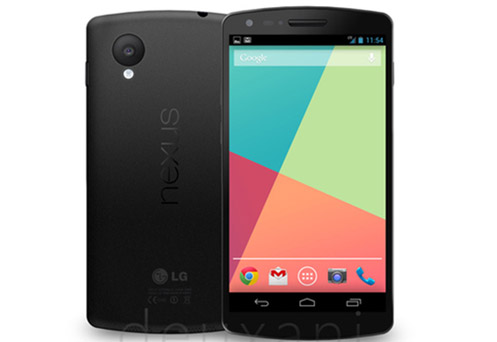
LG Nexus 5 is official, runs Android 4.4 KitKak

The leak storm is finally over, Google has just made the Nexus 5 official. The latest Nexus smartphone is manufactured by LG. It rocks a 4.95" LCD display with 1080p resolution, which adds up to a pixel density of 445 ppi. The good news keeps on coming with the addition of Gorilla Glass 3 for enhanced screen protection.
Inside the Nexus 5 is a 2.3GHz Qualcomm Snapdragon 800 chipset with four Krait 400 cores and Adreno 330 GPU. It's definitely not a slouch with 2GB of RAM and Android 4.4 KitKat at the driver's seat.


In a traditional Google manner, internal storage options are either 16GB or 32GB with no microSD card slot to be found. Below the back cover sits a 2,300mAh battery, which isn't exactly the largest we've seen on a 5" smartphone. However, it does support wireless charging, which is cool.
At the back, there's an 8MP with OIS and LED flash. The camera uses a 1/3.2" sensor and an f/2.4 aperture. The camera module protrudes a bit from the rear casing with a LED flash below it. At the front, there's a 1.3MP camera for video calling, too.
The LG Nexus 5 measures 137.84 x 69.17 x 8.59mm and weighs just 130g.
On the connectivity side, the LG Nexus 5 has it all - penta-band 3G, 4G LTE, Wi-Fi a/b/g/n/ac, Bluetooth 4.0 LE, A-GPS, NFC and even.
The Nexus 5 will be available in the US and Canada in North America, the UK, France, Germany, Spain and Italy in Europe, plus Australia, Japan and Korea (and coming soon to India).
The 16GB version of the Nexus 5 is priced at $349/€349. Sales start tomorrow, November 1 from the Google Play Store. Other than the Play Store, you'll be able to grab one from Sprint, T-Mobile, Amazon, Best Buy and RadioShack

Nexus 5 torn down in front of a camera

Here is another Google Nexus 5 leak. In case you aren't tired of seeing the smartphone leaking from pretty much every corner of the universe, here we have yet another set of pictures for you.
This time the Nexus 5 poses in front of a camera with an opened battery cover. You'll get to see the 2,300 mAh battery, the alleged OIS camera, plus the round earpiece.

LG Nexus 5
There are a few high-res photos of the Nexus 5 itself.

LG Nexus 5
We already know everything there is to know about the LG-made Google Nexus 5. You can check its specs here if you think you've missed something.
We expect Nexus 5 to go official any moment now. It's about time really, because we are all getting really tired of this leak marathon.

Android KitKat leak suggests big improvements for cheap phones, wearables


When you thought we were ready for Google's next announcement, along comes some fresh information, courtesy of regular Google news-breaker, Amir Efrati. He's apparently taken a look at confidential documents outlining what's going on with the next big mobile OS update. The Android KitKat iteration will apparently tackle that tricky fragmentation issue, and has been designed to work well even on lesser-specced Google-powered handsets. The new Android OS "optimizes memory use in every major component," and will include tools to make memory-friendly apps for "entry-level devices" with memory even as low as 512MB.
The other major point is how Google, a well-known proponent of wearables, is already is prepping for even more smartwatches and visors on its mobile operating system. The new version will reportedly include support for three new sensors: geomagnetic rotation vector, step detection and step counters, which could be Android's way of answering Apple's inclusion of a dedicated motion processor in its latest iPhone. The source reckons these are geared towards Google's rumored smart watch -- or possibly glass. Google is apparently still working on making NFC a bigger deal, and has also worked internally on improving smartphones' skills controlling your TV and other devices. Apparently, this will involve unifying how Android deals with IR blasters, rather than the fragmented approach brought by phone makers including Samsung, LG, Sony and HTC. Bluetooth is also rumored to see significant improvements, with Bluetooth HID over GATT and Message Access Profile both mentioned what Android-running hardware can talk with.
Update: The author's also taken to Twitter, adding that there will be a new fullscreen mode, with the ability for developers to create interfaces from edge to edge. The navigation bar will apparently remain hidden. Sharing the love over on G+, he adds that there could well be power savings alongside the update, with both sensor and WiFi batching helping to eke out battery life.
We'll hopefully see soon how much of this hits the mark, and have our fingers crossed that there's also a new phone, primed with those sensors, to go with it all.

Ticket issued to driver wearing Google Glass

A Californian woman has been issued with a traffic ticket for driving while wearing Google Glass.
On 30 October, Cecilia Abadie was pulled over and issued with a ticket for speeding and wearing the smart spectacles while driving.
Ms Abadie was cited for breaking a Californian law which prohibits people from watching TV while driving.
Google GlassShe is now considering whether to take legal action to fight the ticket on the grounds that the device was turned off.
Ms Abadie used her page on the Google+ social network to document her experience and share a picture of the ticket that was issued to her.
On that document, the policeman cited Ms Abadie for driving at 80mph (128km/h) in a 65mph zone on Interstate 15 in San Diego and because she was "driving with monitor visible to driver (Google Glass)". When contacted by the BBC, a spokesman for the Californian Highway Patrol said this was in violation of state vehicle code 27602.
In her comments on Google+, Ms Abadie said the officer who stopped her said wearing the smart spectacles was a danger because they could obscure her view of the road and other vehicles.
In her defence, she said she regularly drove while wearing the gadget but never turned it on. Google Glass is a wearable computer controlled by voice and touch that projects information on to a lens and in the eyeline of the owner.
Many of those who posted comments to her page said Google Glass might be covered by exceptions in the 27602 code that let a driver view a display if it shows maps, GPS or can help "enhance or supplement the driver's view".
In addition, some offered to curate a fund that would help pay for any legal representation Ms Abadie needed to fight the ticket

Sony loses money in Q2, smartphone sales improving

Sony has been inching its way back to its former glory, but its return to profitability hit a snag in the quarter that ended this September. The company posted a loss of $197 million from a small profit the previous quarter.


The good news is that the Mobile Products & Communication – the division responsible for phones, tablets and computers – showed the biggest increase. Sales were up 39.3% year on year and operating income increased by $2.25 billion, but the division still ended the quarter $9 million in the red. Still, it's better than the $235 million operating loss from the same quarter last year.
It seems that smartphone sales improved – more units were sold at a higher average selling price (ASP) – but the PC market dragged the division down. Favorable exchange rates also helped.
The Xperia Z was in the Top 3 in revenue in 20 countries and Sony sold 10 million Xperias during the quarter. The company will continue its focus on premium devices and expects sales to remain strong going forward.


The Game division of Sony reports a 5.1% increase in sales, a total of $1.6 billion, but an operating loss of $8 million. PS2 and PS3 sales are declining (the PS2 was discontinued, the PS3 is about to be replaced by the PS4). PSP and PS Vita sales also took a hit, partly due to a price cut on the Vita.
The Imaging Products & Solutions division continues to slide, it's down -6.9% in sales and posted an operating loss of $24 million. This is attributed to a "significant decrease" in sales of digital cameras and video cameras.
Home Entertainment & Sound is also in trouble with decreasing LCD TV unit sales, but revenues increased 11.8% thanks to favorable currency exchange rates and the operating loss declined to $123 million.
Sony Pictures is in the red, Music made some cash ($99 million) and once again Financial Services was the best division of the company bringing in $400 million, a 25.7% improvement in operating income.
Check out Sony's press release for more details (note: PDF). You can also find presentation slides here.

Nokia seeks to ban import of One smartphones in UK

Nokia has scored an important victory in its legal crusade against HTC. The Patents Court in London has found that the Taiwanese company infringes on one of Nokia's patents. The Finns will now try and leverage on the decision and pursue an import ban of the One smartphones as well as seeking compensation of undisclosed amount.

The Finnish company is displeased with HTC for using its patent for a "modulator, equipment used by phones to transmit data". The Taiwanese manufacturer has argued that the technology in question is found in Qualcomm chips it purchases for its One smartphone, and it's up to the chip maker to negotiate the licenses. That's why HTC feels the court has taken the wrong decition and has expressed its plans to appeal.
It seems the essence of the argument is very similar to the one that occurred in April in the Netherlands. Then, Nokia won a short ban against the HTC One sales over a violation of a patent regarding the use of a proprietary microphone. It turned out that ST Microelectronics, which had signed a deal with Nokia to exclusively manufacture it for its Lumia devices, slipped up and allowed HTC to use it too.
In the end, the ban was lifted from the Hague after it ruled out that HTC was not at fault.
By the look of things, HTC is going to employ the same strategy here to try and lift the ban on the One sales in the UK. The Taiwanese highlighted that Nokia had signed an agreement in the US not to sue Qualcomm over the matter, so going after HTC doesn't make sense.
Nokia expressed its satisfaction with the decision and has released the following statement:
"This is the third court this year to find that HTC infringes Nokia patents, bringing the number of patents found infringed to four," said a spokesman for the European company.
It's not yet known what the outcome of the case would be, but Nokia we are certainly hoping the two companies will find a solution that doesn't involve sales bans. After all limiting the choice for end-users is hardly the point of the patent system.

Google Glass to get a hardware update later this year, free for existing users

Google has announced that they will be updating the Google Glass hardware later this year. The updated design will allow users to use Glass with upcoming lines of shades or use prescription frames. Google has also added a mono earbud for audio.

Those who are part of the Google Explorer program and have purchased the Glass will be delighted to know that they will be able to exchange their current Google Glass with the new one when it releases at no additional cost.
Google has also updated their Explorer program that now allows users of Google Glass to invite three friends to join their program, which will enable them to purchase the Google Glass online and have it delivered anywhere they want.
Google will be providing additional details later.

Pink Samsung Galaxy Note 3 goes on sale in the UK

Samsung Galaxy Note 3 was announced in three flavors - black, white and pink. The black and white Note 3 are already available globally, while the pink is yet to hit the shelves.
It seems UK is the first market to get the pink Galaxy Note 3. It will be available tomorrow exclusively via Phones 4U. You can get the phablet for free with a 2-year contract on various plans starting at £43. If you need a cheaper contract - you can get the phablet on £40/month deal, but you will have to pay £100 upfront.
If you get the pink Galaxy Note 3 on a 4G tariff, you get a free wireless speaker worth £120. What’s more, anyone upgrading to the new smartphone on a Vodafone 4G ready plan will gets Sky Sports Mobile or Spotify Premium included for no extra charge.
The Phones 4U exclusivity will last until the end of November. After that the pink Galaxy Note 3 will become across the UK.
There is no info on when other markets will be getting the pink edition

Nexus 5 hands-on video leaks, again

http://cdn.gsmarena.com/vv/newsimg/13/09/nexus-5-offc-leak/gsmarena_001.jpgThis is getting embarrassing – the Nexus 5 has leaked all over the place, even gone on preorder, and yet Google still hasn't officially announced it. Well, you might not be getting the official info on the Nexus 5 yet, but here's a lengthy hands-on video in case there was something about the phone that wasn’t known yet.
The About screen on the device reports it as the Nexus 5 running Android Key Lime Pie, which means it was probably running old software. The phone is powered by a Snapdragon 800 chipset and has around 12GB user-available storage, which means 16GB total storage.
 
The video shows off some of the apps – Chrome, Camera, Calendar, YouTube, Keep, Google Earth, but doesn’t, for example, show the new Hangouts that is supposed to come out soon.
Come on Google, just announce the Nexus 5 and Android 4.4 KitKat already.

Sony releases a lengthy FAQ for the PlayStation 4

The launch of the PlayStation 4 console in the US and Canada is just a fortnight away now. But even if you have made up your mind to purchase one, there might still be a lot of unanswered questions in your mind regarding this next gen console.

But it seems Sony understands this very well, which is why they have released an incredibly in depth FAQ for the PS4 on their blog, which should answer just about any query you may have about the console, and even those you haven’t.
Here’s a quick list of the important things mentioned in the FAQ:
  • The PS4 is releasing in North America and Canada on November 15 and will cost $399.99 for a console with a 500GB hard drive, single DUALSHOCK 4 controller, mono headset, USB charging cable, HDMI cable and power cable. The PlayStation camera or any additional DUALSHOCK 4 controllers would cost you $59.99 extra.
  • The hard drive is user replaceable, just like on the PS3, as long as it is a standard 2.5-inch form factor and above 160GB. You cannot use an external drive with the PS4.
  • The PS4 has an HDMI out, optical audio out, Ethernet, two USB 3.0 ports and an auxiliary port for the PlayStation camera. There is no analog audio/video out this time as on the PS3.
  • The PS4 supports 802.11b/g/n W-Fi and Bluetooth 2.1.
  • The PS4 supports video output for games and other media up to 1080p at 60fps. The console technically supports 4k resolution but that is not available yet and might be added in future for images and videos. The PS4 does not support 4k games.
  • The PS4 uses a faster version of the Blu-ray drive compared to the PS3. The Blu-ray disc will be used for distributing games and for watching movies.
  • To play Blu-ray or DVD movies, you will need the version 1.5 update that will release on launch day. If you cannot connect the console online you can download it separetely and update through a USB drive or request for a disc with the update to be mailed to you.
  • The PS4 does not support audio CD or MP3 audio formats.
  • The PS4 can download game and console updates in the background, even in standby mode. It can also charge the DUALSHOCK 4 controller in standby mode, unlike the PS3 that had to be kept on.
  • The current Sony Wireless Stereo Headsets won’t be compatible with the PS4 at launch.
  • You can get audio out through the 3.5mm jack on the DUALSHOCK 4 controller.
  • The PS4 is not backward compatible with PS3, PS2 or PSone games. You can, however, get enhanced version of some of the online digital versions of PS3 games for the PS4, and if you bought Call of Duty: Ghosts, Assassin’s Creed IV Black Flag, and Battlefield 4 for the PS3 you can digitally upgrade to the PS4 version for $9.99.
  • The PS4 supports used games and does not require an always online connection.
  • A PlayStation Plus subscription is mandatory for playing online, except for a few free to play titles.
For more FAQ and information on launch titles, click the link below.
Source