On
October 31, 2013, the US Patent & Trademark Office published a
patent application from Apple that reveals a new power management system
that will work with both a power adapter and seamlessly with a portable
solar panel accessory for busy people on the go. Apple's engineers are
thinking big with their on-site solar power
now creating the energy equivalent to powering 17,600 homes a year. The
experience that Apple's engineers are gaining with working with solar
panels is filtering through to creating a power management system for
future Macs and iDevices. Apple has already been granted seven solar power patents thus far and you could review most of them in our Green Technology Archives.
Today's patent goes one step further than most by introducing us to a
solar power panel accessory for mobile devices like a MacBook or iPhone
that won't require a power converter. Apple's system may be closer to
reality than first thought considering that Apple's senior power design
engineer noted as the inventor of this system has been snatched by Samsung within the last year.
On
October 31, 2013, the US Patent & Trademark Office published a
patent application from Apple that reveals a new power management system
that will work with both a power adapter and seamlessly with a portable
solar panel accessory for busy people on the go. Apple's engineers are
thinking big with their on-site solar power
now creating the energy equivalent to powering 17,600 homes a year. The
experience that Apple's engineers are gaining with working with solar
panels is filtering through to creating a power management system for
future Macs and iDevices. Apple has already been granted seven solar power patents thus far and you could review most of them in our Green Technology Archives.
Today's patent goes one step further than most by introducing us to a
solar power panel accessory for mobile devices like a MacBook or iPhone
that won't require a power converter. Apple's system may be closer to
reality than first thought considering that Apple's senior power design
engineer noted as the inventor of this system has been snatched by Samsung within the last year.
Apple Invents Portable Solar Panel Accessory for Recharging Devices on the Go
Apple's
patent filing states that in the absence of the power adapter and/or
mains electricity, the portable electronic device may be powered by the
battery until the battery is fully discharged. Because the battery has a
limited runtime, operation of the portable electronic device may
generally be dependent on the availability of mains electricity. Hence,
use of portable electronic devices may be facilitated by improving
access to power sources for the portable electronic devices.
Apple's
invention relates to providing a power management system that supplies
power to components in an electronic device. The power management system
includes a system microcontroller (SMC) and a charger. The electronic
devices that will be able to take advantage of Apple's new solar panel
include a MacBook, iPad, iPod touch and iPhone.
During
operation, the power management system accepts power from at least one
of a power adapter and a solar panel. Next, the power management system
supplies the power to components in the electronic device without using a
converter circuit between the solar panel and the power management
system.
In
some embodiments, using the power management system to supply the power
to the components involves tracking a maximum power point of the solar
panel.
In
some embodiments, tracking the maximum power point of the solar panel
involves measuring one or more output powers associated with at least
one of the solar panel and the power management system, and adjusting an
input voltage of the power management system based on the one or more
output powers. For example, the input voltage may be adjusted based on
the output power(s) using a perturb-and-observe technique and/or an
incremental conductance technique.
As
noted in Apple's patent FIG. 1, a MacBook Pro includes functionality to
accept power from a solar panel 106 in lieu of and/or in addition to
power from power adapter 104.
Like
a power adapter, a solar panel may connect to the MacBook Pro via a USB
connector, MagSafe connector, and/or other power connector. Electricity
from the solar panel may then be used to charge the battery and/or
power the components of the MacBook Pro or other electronic device.
In addition, a
power management system in the electronic device may be configured to
accept power from a solar panel without using a converter circuit
between the solar panel and the power management system. In other words,
the power management system may operate within the electronic device to
convert power from the solar panel into a voltage, current, and/or form
that are compatible with the battery and/or components of the
electronic device.
According
to Apple, the solar panel may operate as a power source to an
electronic device without requiring an additional converter circuit
between the solar panel and the power management system. Instead,
existing parts of the power management system (e.g., charger or system
microcontroller) may be modified to convert power from the solar panel
and perform Maximum Point Power Tracking (MPPT) on the power. In turn,
the power management system may represent a size and/or weight savings
over conventional power management systems.
Apple's
patent FIG. 5 noted above presents us with a flowchart illustrating the
process of tracking a maximum power point of a solar panel in
accordance to their invention.
Apple's
patent FIG. 4 noted below shows us an overview of a power management
system for supplying power to components in an electronic device.

Patent Credits
Apple
credits Kisun Lee, Manisha Pandya and Shimon Elkayam as the inventors
of patent application 20130290743 which was originally filed in Q3 2012.
For engineers and geeks who like to delve into this
kind of technology could also view another kind of power management
system
patent that was published today. Apple's "Power Management for a system
having non-volatile memory" patent could be found here.
As always, count on Samsung being in this new race
related to solar power. And with Apple's engineer defecting to Samsung
in the last year, the race could certainly be a heated one. Who will win
this race to market? Only time will tell.


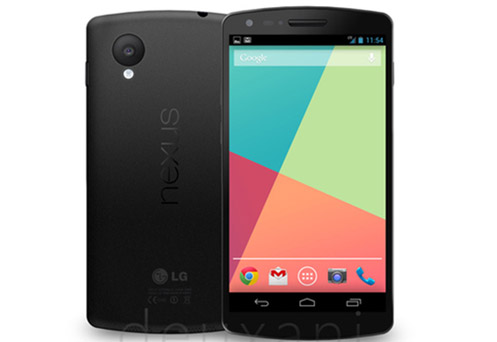
 Android 4.4 KitKat has been officially announced and as usual, the
latest version of the Android OS debuts alongside the a new Nexus, the
Android 4.4 KitKat has been officially announced and as usual, the
latest version of the Android OS debuts alongside the a new Nexus, the 


 Samsung Galaxy Note 3
was announced in three flavors - black, white and pink. The black and
white Note 3 are already available globally, while the pink is yet to
hit the shelves.
Samsung Galaxy Note 3
was announced in three flavors - black, white and pink. The black and
white Note 3 are already available globally, while the pink is yet to
hit the shelves.